
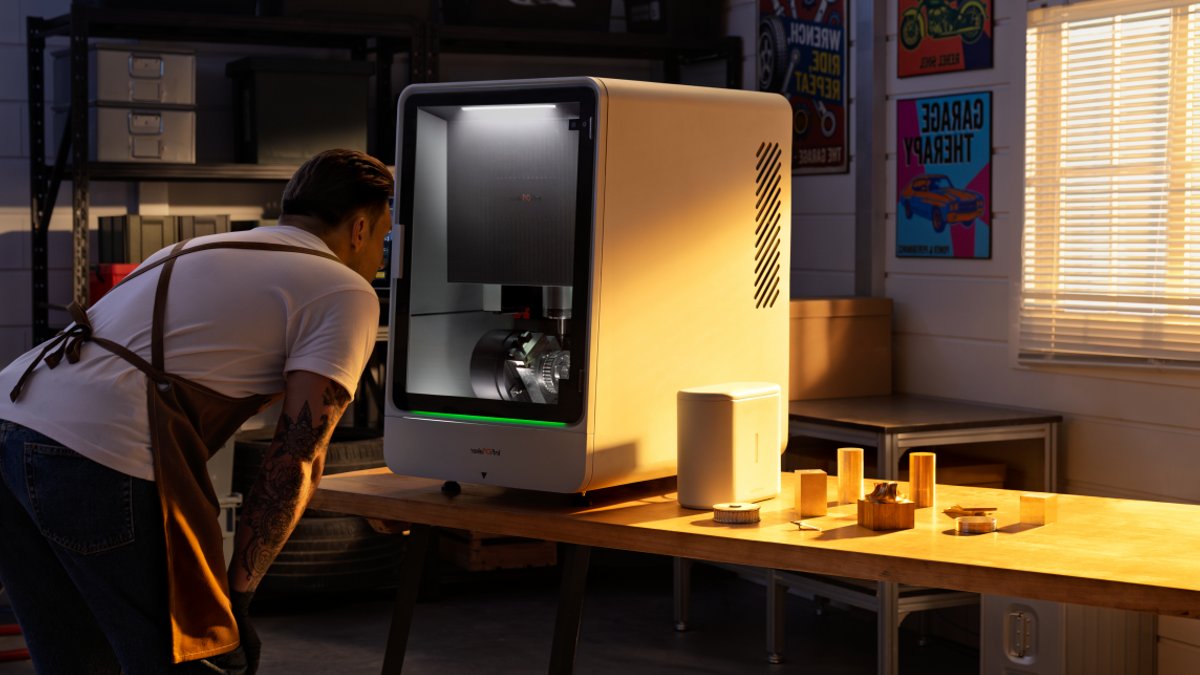
Advanced manufacturing usually conjures images of multimillion-dollar machinery inside large factories, not a compact device sitting on a desk. That perception is exactly what InfiMaker, a startup founded in 2024, is trying to change. The company positions itself as a desktop manufacturing company, developing tools for engineers, designers, entrepreneurs, and makers. By combining artificial intelligence with software automation, it aims to make industrial-grade precision machining accessible to individual users.
The K1 and a different approach
Unlike most desktop CNC (Computer Numerical Control) manufacturers, InfiMaker chose not to enter the crowded market for 3-axis machines. Instead, it is introducing the K1, a desktop 5-axis CNC platform. According to Bowen Xie, Founder and CEO of InfiMaker, simply introducing another desktop 3-axis machine would not fundamentally change the user experience. The biggest obstacle to wider adoption of 5-axis machining is not the hardware itself, but the complexity of traditional software workflows and the expertise required to operate them, Xie said.
Conventional 5-axis CNC machines have long been confined to industrial manufacturing because of their high cost and steep learning curve. Operators are typically expected to understand CAM software, machining parameters, and toolpath generation before they can produce a part, making the technology inaccessible to many engineers, designers, and makers. Xie believes advances in AI can help lower those barriers. By automating much of the CAM workflow, the company aims to make 5-axis machining as approachable as consumer electronics rather than a tool reserved for manufacturing specialists.
Related: When Should a Startup Hire a Cybersecurity Provider?
The K1’s workflow reflects this philosophy. Powered by the company’s in-house CAM software, InfiStudio, the software combines AI-assisted parameter generation and machining-strategy recommendations with automated toolpath generation, material-specific presets, and guided workflows. For decorative and artistic projects, users can upload a reference image and let AI generate a 3D model before preparing the machining process. For precision parts, users can import CAD models, review recommended machining settings, and generate toolpaths through a guided workflow. This eliminates much of the manual setup required.
To further simplify the workflow, the K1 also features automatic material recognition. An onboard camera reads material tags and automatically loads the corresponding machining profile and cutting parameters, which reduces the need for manual configuration and shortens the time from design to production. “We’re not just trying to build a CNC machine with a more powerful spindle,” the founder told TechNode. “We’re trying to shorten the distance between a CAD model and the final machined part.” Rather than competing only on hardware specifications, InfiMaker sees software automation and AI-assisted workflows as the key to improving the user experience, according to Xie.
For now, InfiMaker is focusing on North America and Europe, where it sees mature maker communities and strong demand for productivity tools. The company plans to continue expanding globally by building user communities and incorporating customer feedback into future product development.
Related: The Role of an Advertising Company in a Competitive Market Like Tampa
Expanding who can build
InfiMaker believes the next stage of competition in manufacturing will be defined not only by machine performance, but also by accessibility and workflow design. AI is unlikely to replace manufacturing engineers, but it can lower the knowledge barrier and make advanced manufacturing capabilities available to a much wider range of designers, developers, entrepreneurs, and makers, Xie mentioned. The same philosophy also shapes the company’s long-term vision. “We want to make hands-on building possible again, one person, one desk, a whole factory,” Xie said.
As AI becomes increasingly integrated into industrial software, desktop manufacturing is shifting from a race to improve machine specifications toward creating a more streamlined manufacturing experience. For InfiMaker, the goal is not simply to introduce another 5-axis CNC machine, but to make industrial-grade manufacturing more accessible through the integration of AI, software, and hardware. If that vision becomes reality, future manufacturing innovation may take place not only on factory floors, but increasingly on the desks of engineers, designers, and creators around the world. The startup faces the challenge of proving that this software-heavy approach scales beyond a handful of early adopters. While the automation tools are promising, the K1 must demonstrate long-term reliability in real-world workshops to justify its premium positioning against both consumer-grade desktop machines and industrial systems.